
CoEfficiant journal
Humanity vs AI: Navigating the Symbiosis of Human Judgment and Artificial Intelligence
A critical examination of the Humanity vs AI debate in enterprise engineering — unpacking why the zero-sum replacement narrative is flawed, where machine intelligence excels, and why the future belongs to symbiotic teams that treat human intuition and ethical judgment as the ultimate differentiator.
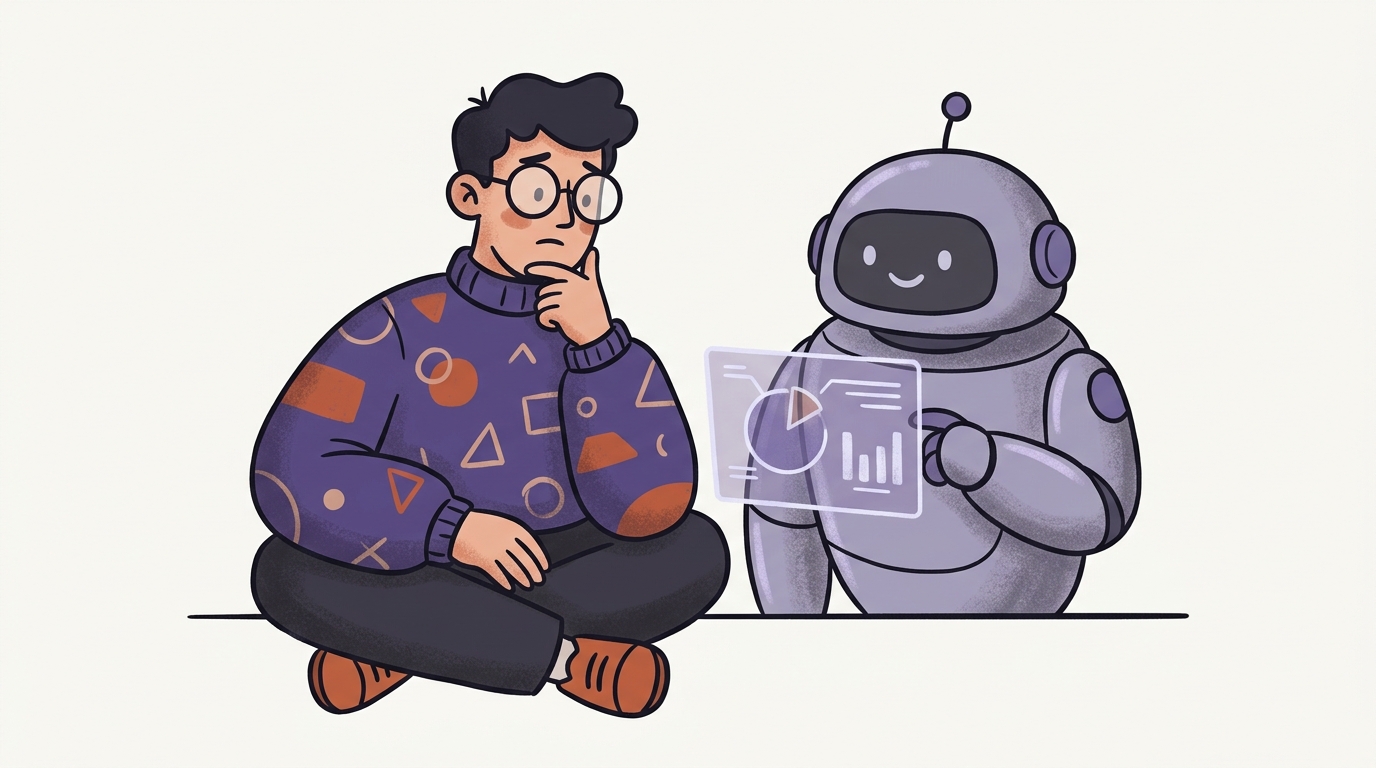
Humanity vs AI: Navigating the Symbiosis of Human Judgment and Artificial Intelligence
The narrative surrounding modern technology has coalesced around a dramatic dichotomy: Humanity vs Artificial Intelligence. Popular discourse oscillates between apocalyptic anxiety of technological replacement and unbridled technocratic optimism. Headlines routinely frame every algorithmic milestone as another territory wrested away from human relevance.
Yet within engineering organizations building mission-critical software, this binary framing is fundamentally misleading. Humanity versus AI is a false dichotomy. The most resilient, high-velocity engineering teams in the world do not view artificial intelligence as a substitute for human intellect, but as an expansive amplifier of human judgment. The true competitive frontier is not carbon versus silicon; it is the deliberate, architectural symbiosis of machine throughput and human discernment.
The Core Paradox: Processing Speed vs Contextual Meaning
To design an effective operating model with artificial intelligence, technical leaders must first isolate where machine intelligence excels and where human consciousness remains irreducibly vital.
Modern Large Language Models (LLMs) and autonomous agents possess an extraordinary ability to synthesize vast dimensional spaces, traverse legacy codebases without fatigue, identify latent syntax anomalies, and rapidly generate combinatorial prototypes. What might require three days of manual boilerplate scaffolding can now be produced in seconds.
However, machine cognition is entirely retrospective and probabilistic. Models calculate what token is statistically most plausible given previous tokens. They do not understand the underlying commercial stakes, the human friction between organizational silos, or the subtle ethical obligations binding a business to its customers. A model cannot care whether an architecture withstands an unexpected regulatory subpoena or whether an edge case causes reputational damage to an enterprise brand.
Human engineers, by contrast, operate on meaning, responsibility, and intentionality. When a senior architect evaluates a distributed system, they are not merely predicting syntax; they are assessing risk, anticipating organizational drift, navigating ambiguity, and synthesizing business strategy with mechanical reality.
The Asymmetric Strengths of Human vs Machine
| Dimension | Artificial Intelligence (The Machine) | Humanity (The Engineer & Leader) |
|---|---|---|
| Cognitive Scale | Processes gigabytes of code, logs, and telemetry simultaneously without cognitive fatigue. | Curates, filters, and directs focus to the critical 1% that dictates strategic success. |
| Exploration Speed | Explores dozens of combinatorial permutations, test cases, and edge mocks in seconds. | Formulates the core problem statement, defining what is worth exploring and why. |
| Contextual Depth | Bounded by the prompt context window and training horizon; vulnerable to hallucination. | Holds deep tacit institutional knowledge, unwritten political context, and business history. |
| Accountability | Zero legal, ethical, or operational liability for errors or failures. | Carries moral, legal, and operational ownership of production systems. |
| Pattern Matching | Interpolates between historical training patterns with extreme accuracy. | Innovates across paradigms, demonstrating creative leaps and counter-intuitive breakthroughs. |
The Real Risk: Cognitive Atrophy and the Surrender of Judgment
While the fear of wholesale human obsolescence is exaggerated, a much more insidious danger exists: cognitive atrophy through passive reliance.
When engineering teams abdicate critical reasoning to automated systems, they succumb to "automation complacency." Junior engineers who rely entirely on LLM generation risk failing to develop the mental models required to debug subtle race conditions, trace memory leaks, or reason through distributed consensus failures. If you cannot write the code manually, you lack the intellectual scaffolding required to review it safely.
Enterprise leaders must guard against treating AI outputs as authoritative truth. Machine intelligence generates hypotheses, drafts, and accelerations; human engineering provides the verification, skepticism, and ultimate approval. The role of the modern software engineer is transforming from a typist of syntax into a Reviewer-in-Chief—an editor, auditor, and architect of complex machine-generated systems.
Human-in-the-Loop: The Enterprise Symbiosis Model
At CoEfficiant, our approach to artificial intelligence enablement is rooted in human-centered governance. Rather than chasing fragile "zero-human" autonomy, enterprise systems achieve sustainable velocity by embedding rigorous human-in-the-loop checkpoints at every stage of the lifecycle:
1. Intent Formulation & Problem Architecture
Humans define the business objective, identify the non-negotiable constraints, and map customer empathy. AI systems then generate architectural alternatives and draft specifications.
2. High-Throughput Scaffolding & Verification
Agents absorb repetitive implementation burdens—wiring boilerplate controllers, writing property-based test suites, translating schemas, and synthesizing test fixtures—freeing human developers from cognitive grind.
3. Rigorous Editorial Review & Boundary Defense
Every generated artifact must pass through human gates trained to look for architectural drift, security vulnerabilities, latency hotspots, and unhandled boundary conditions before reaching production.
4. Operational Telemetry & Continuous Feedback
AI monitoring systems correlate production logs and identify anomalies across multi-cloud infrastructure, presenting distilled insights to human SREs who make contextual remediation decisions.
The Future Belongs to the Synthesizers
The narrative of "Humanity vs AI" will inevitably fade as the novelty of generative algorithms gives way to operational reality. In its place will stand an inescapable economic truth: organizations that attempt to replace human insight with raw automation will drown in unmaintainable, hallucinated technical debt. Conversely, organizations that stubbornly resist AI tooling will be outpaced by agile competitors who move ten times faster.
The future does not belong to pure humans, nor does it belong to pure machines. The future belongs to the synthesizers—engineers, architects, and technical leaders who wield artificial intelligence with uncompromising craftsmanship, grounded in ethical judgment, profound empathy, and unwavering accountability.
Work with us
Ready to apply these insights to your delivery?
Our engineers can help you move from theory to working code in production. Book a free 30-minute technical discovery call.
Comments
Bring in the team perspective.